





Popular
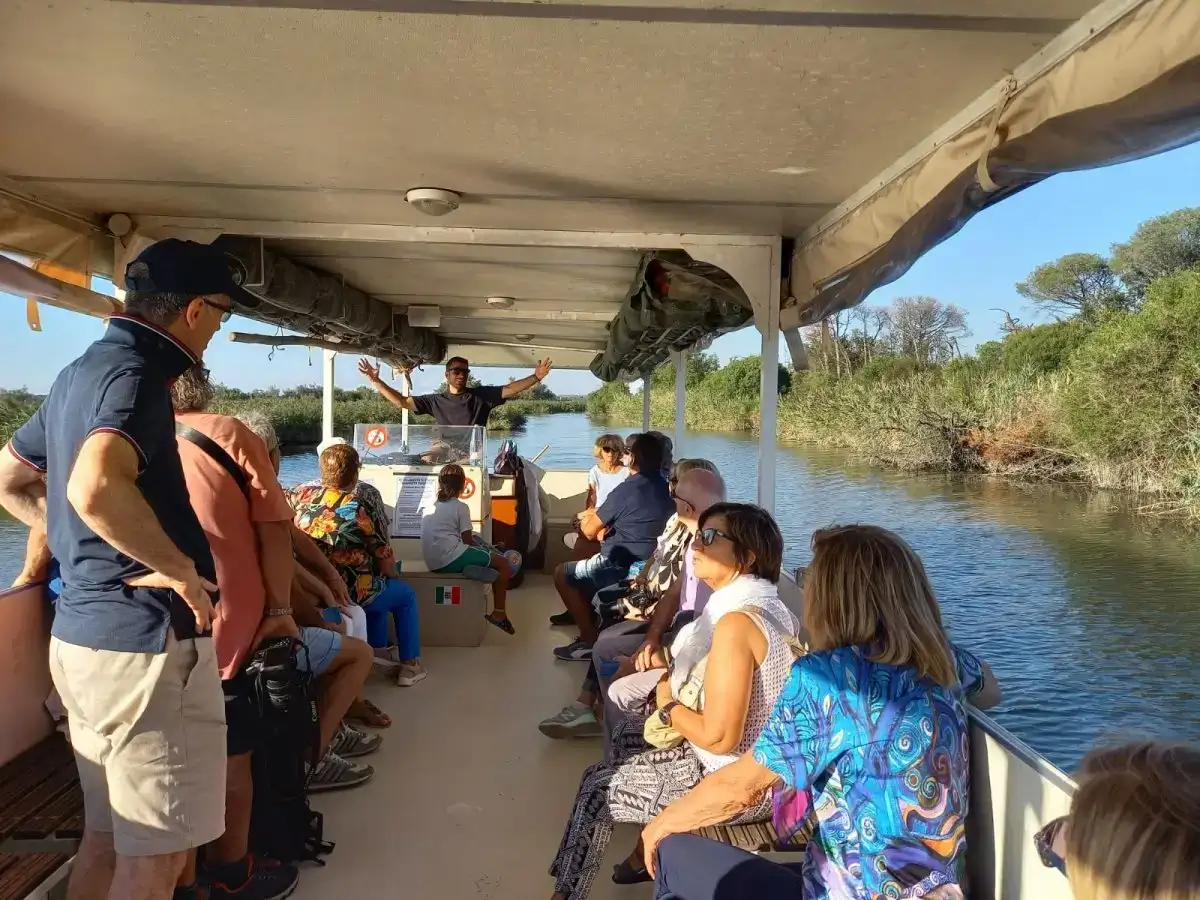
Tours, packages, and customized itineraries in the Po Delta region.
Select a date and, if applicable, a time, and pay securely with Stripe. You'll receive an immediate confirmation via email.
The voucher is electronic: just show it on your smartphone and enjoy your experience.
And if you need help or have any questions, you can Contact Us
Art and Millennial History in the Heart of the Po Delta
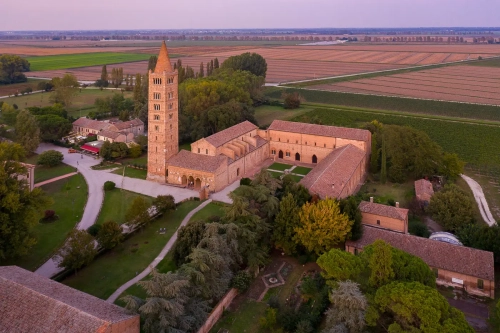
In the heart of the Po Delta Park, art and landscape merge into a fascinating tale that spans centuries of history. Along the Strada Statale 309 Romea, the natural gateway to the Delta, the journey begins with one of the region’s most remarkable landmarks: the ancient Pomposa Abbey. Its imposing bell tower rises above the plain, heralding the former glory of one of Italy’s most important Benedictine monastic complexes.
Founded during the Early Middle Ages, Pomposa Abbey reached its peak around the year 1000, becoming one of the leading cultural, religious and economic centres of northern Italy. Magnificent examples of Romanesque architecture remain today, including the abbey church, the bell tower and the monastic buildings, true architectural masterpieces that make every visit both inspiring and memorable.
Of exceptional importance are the 14th-century fresco cycles, especially the one extending along the entire central nave. In the apse, visitors can admire the decoration created by Vitale da Bologna in the 14th century, depicting Christ Blessing within the Mystical Mandorla, one of the abbey’s most iconic images. Equally noteworthy are the mosaic floors.
The pavement of the central nave, made of mosaic and opus sectile, is a complex composition divided into four sections dating from the 11th and 12th centuries, comparable in refinement and structure to the floors of many Venetian churches.

A short distance away, near the Po di Goro branch of the river, stands the majestic Mesola Castle, easily recognised by its four crenellated towers. Today the castle houses the Deer and Forest Museum and tells the unique story of the relationship between people and the Delta landscape. This elegant Este residence was commissioned in 1578 by Alfonso II d’Este as a hunting lodge and symbol of power. Half fortress and half noble residence, the castle was surrounded by extensive walls and a vast woodland area, now partly preserved as the nearby Great Mesola Forest.
Just a short distance from the castle lies the Gran Bosco della Mesola Nature Reserve, one of the last and best-preserved lowland forests in Italy. Formed on ancient dune ridges created by the Po di Goro and Po di Volano branches, the forest is now a biodiversity hotspot and the natural habitat of the famous Mesola Deer. Visitors can explore this extraordinary environment through nature trails on foot, by bicycle or with guided tours, enjoying an immersive experience in the unspoilt nature of the Po Delta.
Discover our guided excursions, cultural and nature itineraries, slow tourism experiences and themed routes combining art, history and landscapes in one of the most captivating areas of Emilia-Romagna.